
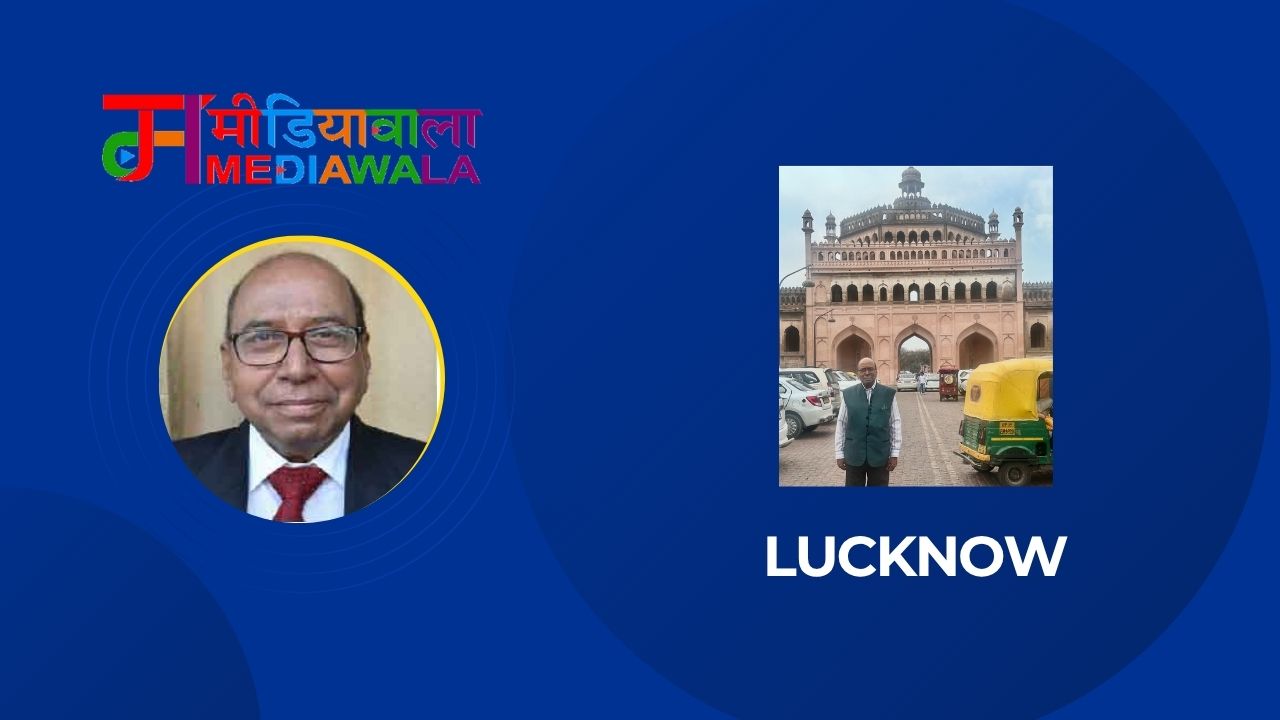
LUCKNOW
– N K Tripathi
Lucknow, situated on the bank of the river Gomti in the heart of UP, is a stupendous blend of the majestic past and a flourishing present. Starting as the cradle of Nawabi splendour, presently it’s a flourishing modern capital city.
Lucknow architecturally fascinates, but the real strength of the city lies in its distinct polite culture of the people. I personally grew with the city. I spent my college days in cycle and had been in touch with it for the seven decades. I have an animate bond with it.
Lucknow has completed 250 years of its existence. The city began as the new capital of Awadh. The shift of the capital from Faizabad to Lucknow in 1775 by Nawab Asaf‑ud‑Daula marked a monumental turning point—ushering in an era of architectural splendour, cultural richness and artistic brilliance that still defines the soul of this city.
Over the years, Lucknow has blossomed into a major urban centre in the northern India, blending its timeless ‘tehzeeb’ with modern growth and global aspirations. This city stands in sharp contrast to its neighbouring Kanpur.
After 250 years, we can see the vision of a vibrant Lucknow — laying the foundation for a Greater Lucknow that mingles the legacy of its past with the promise of its future. Fortunately, it’s not going to be a mega Metropolis which takes away many finer human touches under its weight. Lucknow will always remain a lively spirit.